Frequently Asked Questions

General FAQ

Do you have distributors?
No. We sell directly to our customers. Our "factory-direct" model allows us to offer:
  • Superior designs at a reasonable cost
  • Expert advice and support (we know our products best)
In short, when you buy from TRAFx, you are dealing directly with the people who design and build the products.

Do you ship worldwide?
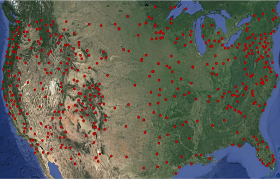
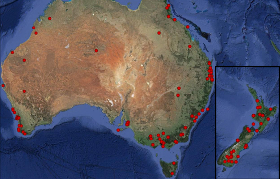
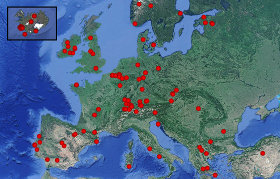
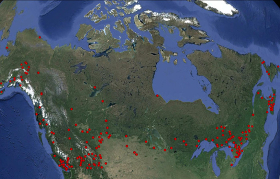
Yes. We ship worldwide using air courier. Because our products are small, shipping costs are generally modest. The maps below show some locations we’ve shipped to over the years.

Where are TRAFx counters for roads and trails used?

Canada and Alaska

Where are TRAFx counters for roads and trails used?

Contiguous US

Where are TRAFx counters for roads and trails used?

Australia and New Zealand

Where are TRAFx counters for roads and trails used?

Europe

Do I have to buy the complete system? Can’t I just buy a single counter?
First-time customers must purchase a system package, as it includes the equipment necessary to configure (program) the counters and to download and process data. For this reason, standalone counters are not available for initial purchase. However, once you own a system package, you can easily buy individual counters to expand your setup.

How long is the warranty?
TRAFx products have a one-year limited warranty which covers manufacturing-related defects.

Why are they called “counters”? Shouldn’t they be called sensors?
“Counter” is simply a generic term we use. More accurately, each TRAFx “counter” is a micro-computer with a processor, memory, RAM, ROM, operating system, communication bus, sensor, embedded software, etc. Indeed, each counter has a sensor, but the sensor is only one part of the device, much like the human eye is only one part of our body.

Who is the equipment for?
Most of our customers are government agencies that manage public lands. Click here to learn about who uses TRAFx equipment and why.

What type of batteries do the counters use? Can I replace them myself? How long do they last?
All TRAFx counters use standard, economical alkaline batteries (e.g., Energizer). These batteries are widely available at a low cost and are easily user-replaceable.

The chart below shows how long alkaline batteries (e.g., Energizer, EverReady) last for each TRAFx counter type.

Counter type Battery size Battery life maximum
TRAFx Infrared Trail Counter AA 8-10 years
TRAFx Vehicle Counter C 1.2 years
TRAFx Off-Highway Vehicle Counter/
TRAFx Mountain Bike Counter
C 9 months

Note: Battery brand and temperature influence battery life. Expect shorter battery life in colder climates.

What is the optional 6-digit LCD tally display?
While all TRAFx counters store data in their internal memory, the optional 6-digit LCD tally display provides a visible running total directly on the unit. This allows for a quick visual check of the current count (e.g., 100, 101, 102).
  • Note: This is a factory-installed accessory and must be requested at the time of purchase.
  • Pro Tip: Most customers find the internal memory sufficient and do not order this option.

What are the data options? How much data can a counter store?
TRAFx counters are very versatile in this regard. Data can be collected as hourly totals or daily totals or as individual timestamps. Regardless of the data type, the maximum number of “records” is 14,000. That is, the counter can store 14,000 hourly totals or 14,000 daily totals or 14,000 timestamps.

Each TRAFx counter has three data options:

Hourly totals
  • 14 000 hourly totals (equals 1.6 years data storage capacity)
  • maximum number of counts per each hour is 32,000
  • maximum total counts = 14,000 hours x 32,000 = 448,000,000

Daily totals
  • 14 000 days (equals 38 years data storage capacity)
  • maximum number of counts per each day is 32,000
  • maximum total counts = 14,000 days x 32,000 = 448,000,000

Timestamps
  • 14 000 individual timestamps
  • each timestamp shows year, month, day, hour, minute, second; Example 2012-12-03, 09:45:03

If you configure the counter to collect and store data as hourly or daily totals, it is extremely unlikely you will ever exceed the counter’s data storage capacity---and even if you do, you just download the stored data and make room for more.
If the batteries die will the data stored in the counter’s memory disappear?
No. If the counter’s batteries die or if you remove the counter’s battery, the stored data is safe---it will NOT disappear if the counter does not have battery power. It will be safely stored until you download it.

How can I download a counter in the field?
We recommend using the TRAFx Dock in Shuttle Mode (no laptop or other device required). However, you can also connect the counter to a laptop or desktop PC using the TRAFx dock and cables, and download (and configure) a counter that way.

I noticed that a DataNet subscription is included in a system package. What is DataNet for?
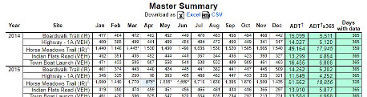
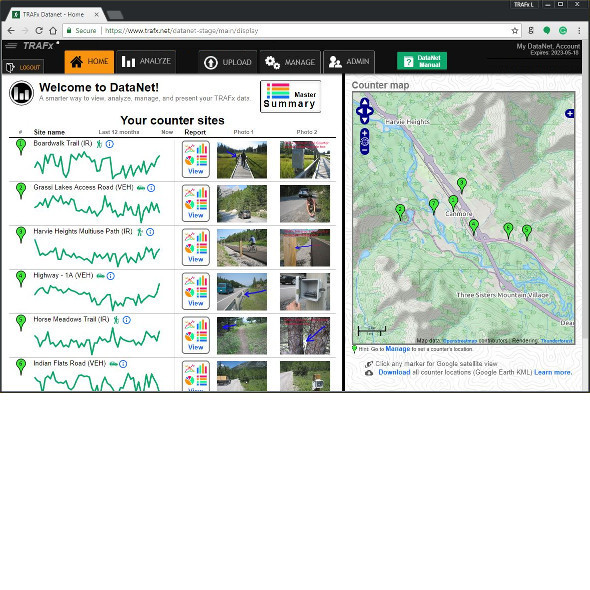
After you have retrieved data from counters in the field, and you are back in your office, you upload the data files (including Shuttle files) from your PC to DataNet. DataNet is an online, web-based software solution used to view and manage your TRAFx data. Many people fail to realize how important good software is. Without good software, you could be spending months trying to make sense of your raw data….with TRAFx DataNet, it can be done in minutes. It is a huge time saver and has many useful features.

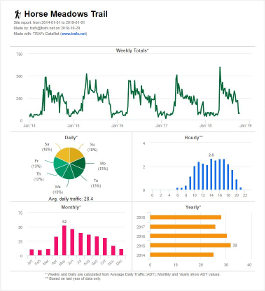
Analyze and manage your vehicle and trail counter data

Can I download TRAFx counters with a smartphone and Bluetooth?
No. We carefully evaluated this but chose not to offer Bluetooth-enabled counters because:

  1. Most smartphones have a minimum specified operating temperature of only 0°C (32°F). The TRAFx Dock operates reliably down to -40°C (-40°F), ensuring safe data downloads in harsh winter conditions.
  2. Wet or snow-covered ground blocks wireless signals, making transmission unreliable for buried Vehicle, OHV, or Mountain Bike counters.
  3. Metal security boxes—often used for our Infrared Trail Counters—block wireless signals.
  4. Wireless protocols significantly drain battery life and introduce added complexity and potential points of failure in the field.

Does TRAFx offer cellular-connected counters?
No. We also carefully evaluated this but do not offer cellular-connected counters because:

  1. See #2, #3 and #4 regarding Bluetooth above. All these problems apply to cellular, too.
  2. Cellular connections require a costly monthly subscription plan (similar to a smartphone) for each individual counter.
  3. Many of our customers deploy counters in remote areas, canyons, and mountains where cellular coverage does not exist or is poor.
  4. Visiting a counter to download it every few months (the TRAFx approach) has advantages in addition to cost. A 2022 nationwide U.S. study noted roughly 30% of cellular-connected permanent outdoor counters were not producing data, and this excludes counters that were offline for more than a year. For a successful counting program, periodic site visits remain crucial to (1) inspect installations and (2) maintain study area familiarity. Field visits matter!

TRAFx Vehicle Counter FAQs

What type of uses is the TRAFx Vehicle Counter suitable for?
Recommended for: Not recommended for:
  • Rural roads of all kinds
  • Gravel roads
  • Two lane highways
  • Roads associated with campgrounds, picnic areas, etc.
  • Freeways and busy urban areas
  • Toll booths or gates
  • Shopping malls, stores, car washes
  • Urban parking lots

How does the vehicle counter detect passing vehicles?
As vehicles move, they disturb the earth’s magnetic field. The TRAFx Vehicle Counter digitizes and analyzes these disturbances using highly sophisticated hardware and software.

Does the TRAFx Vehicle Counter distinguish vehicles by type or size?
No. It is strictly a vehicle counter, not a vehicle classifier. It counts total traffic but does not group vehicles into categories such as passenger cars, pickup trucks, vans, buses, semi-trailer trucks, etc.

How about installation?
The TRAFx Vehicle Counter is a small self-contained box slightly larger than a bar of soap that is usually buried along the roadside, or placed in a lockable box at the roadside. Unlike conventional vehicle counters, there are no inductive wire loops or rubber tubes that need to be cut into or stretched across the road lane. This makes the TRAFx Vehicle Counter easier to install and maintain. Inductive loop counters often cost thousands of dollars to install because they require special equipment, road cuts, lane closures, and specialized labor.

How deep can the vehicle counter be buried? Does it perform differently when buried?
If burying the counter, bury it deep enough to hide it. The TRAFx Vehicle Counter functions the same whether the counter is buried or installed above ground.

What if a vehicle parks over or near the counter? Will the counter still function?
Yes. Unlike most other types of vehicle counters, the TRAFx Vehicle Counter will automatically adjust to the presence of a vehicle parked over top or nearby, and keep on functioning properly. Likewise, if the counter is placed near a metal pole (e.g., signpost) or similar static metal object (guard rail, cattleguard, bridge beam etc.) it will automatically adjust to the presence of these, too.


TRAFx Infrared Counter FAQs

Does the TRAFx Infrared Trail Counter distinguish between pedestrians, bicycles, etc. on a path?
No. It simply counts passing people without classifying them, regardless of mode of travel or type. Walkers, runners, skateboarders, cyclists, e-bikers, dog walkers, snowshoers, cross-country skiers, etc. all generate a basic count.

Should the infrared trail counter be placed in a locking box?
To lock or not to lock…that is the question indeed! In wilderness settings, a locking box sometimes simply attracts unwanted attention and invites possible vandalism. An option for wilderness settings is to simply hide the counter well, so that people do not notice it. In short, for areas where people do not expect to see a locking box, hiding the counter is often the best approach.
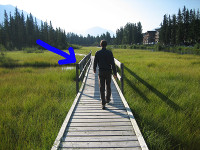
In urban (e.g., city parks) and similar areas, this popular, low-cost (~$25), DIY lockable metal box provides budget-friendly security and enhanced weather protection.
Example of a lockable metal electrical box suitable for a TRAFx infrared trail counter

What are the data options? How much data can a counter store?
Please click here for the answers to these questions.

How accurate is the infrared trail counter?
All infrared trail counters undercount when people travel side by side, or in tight groups. Therefore, it can be said that trail counters yield estimates rather than absolutes. It is difficult to give a single number regarding accuracy because it is dependent upon various factors: how people typically use the trail (single file or side by side), how far apart people are spaced, how busy the trail is, trail width, how a counter is set up, etc. If the trail is narrow and people travel single file and spaced apart, you can expect high accuracy (95 to 100%); if the trail is wide and people typically travel side by side or in tight groups, you can expect accuracy in the range of 75% to 90%.

An important question to ask is “what level of accuracy do I need to answer my management-related questions”? Generally, acceptable accuracy can be defined as the level sufficient to detect changes that are significant to management decisions (Hendee et al. 1990). In the real world of management decisions, often orders of magnitude only really matter (10 vs. 100 vs. 1000 vs. 10000).

In most cases, a reasonable estimate of trail usage is sufficient. If highly accurate data is required, then all trail counters (whether sold by TRAFx or by other vendors) should be visually calibrated. That is, compare visual counts observed over several hours with those the counter records over the same time period. This way an “adjustment factor” (also called “correction coefficient”) can be determined and applied to the data. TRAFx DataNet has a feature that makes applying an adjustment factor to data easy---it only takes a couple of seconds to do.

How long do the batteries last?
Please click here for an answer to this question.

Is a trail counter the same as a people counter?
There are a variety of terms in use: trail monitor, trail traffic counter, trail use data logger, pedestrian counter, people counter, etc. However, some pedestrian counters and people counters are designed for indoor use only (e.g., shopping malls), whereas a trail counter implies it is suitable for the outdoors (i.e., it can handle rain, snow, wind, etc.).


TRAFx Mountain Bike Counter FAQs

What is the detection range of the mountain bike counter?
The TRAFx Mountain Bike Counter is intended mainly for single track mountain bike trails and narrow paths. Bury it immediately next to the single track trail, or in it, depending upon the trail's width.

The detection range is 1m (3.3ft.) from the counter. So, if it is buried in the middle of a trail, it can cover a trail up to 2m (6.6ft.) wide. However, It is generally not suitable for most paved paths because these are too wide.

Will it detect mountain bikes with carbon frames?
Even if the frame is carbon, the bike will still have ferrous metal components that the counter can detect (bike chains, cassettes, disc brakes, etc.). Bikes with insufficient detectable metal are generally rare enough to be statistically insignificant.


TRAFx OHV Counter FAQs

Is an OHV the same as an ATV or ORV?
Most government agencies classify all-terrain vehicles (ATVs) and off-road vehicles (ORVs) as off-highway vehicles (OHVs), so this is the term we use. We could have also called it an ATV counter or an ORV counter --- the various terms are interchangeable. OHV generally implies motorized vehicles used for outdoor recreation.

Will the OHV counter also detect vehicles such as jeeps, pick-up trucks, etc.?
Yes, it will also detect these vehicles.

We want to determine levels of snowmobile use. Is this the right counter?
In general, we do not recommend using the TRAFx OHV Counter for snowmobiles. This is because snow accumulation can result in the snowmobile being very high above ground level and quite far away from the counter. Also, it can be difficult to find the counter under a lot of snow. We generally recommend using the TRAFx Infrared Trail Counter for snowmobiles.